Every zipline needs a way to slow a rider down before they reach the end — that’s the brake system’s only job, and it sounds simple until you start doing the math. There are two dominant approaches used in backyard and semi-commercial installations: the spring brake (a coiled-spring assembly mounted on the cable that absorbs impact energy as the trolley — the wheeled carriage the rider hangs from — compresses it) and the bungee brake (a length of elastic cord, usually rated bungee or shock cord, stretched across the cable path to catch and gradually decelerate the trolley). Both work. Both fail in predictable ways when they’re mismatched to the job. If you’re in the middle of specifying a new span or retrofitting an existing one, this article gives you the comparison framework, the numbers, and a clear decision rule at the end. No guesswork — just the tradeoffs named plainly.
| EDITOR'S PICK[Zip Line Brake Block Kit w (2)…](https://www.amazon.com/dp/B009ZFOQEC?tag=greenflower20-20) | Mid-tier[Bungee Brake Kit (20FT) Zipline…](https://www.amazon.com/dp/B07GT8ZVMN?tag=greenflower20-20) | Budget pick[NTR Zipline Spring Brake Extra…](https://www.amazon.com/dp/B099K1HH9C?tag=greenflower20-20) | |
|---|---|---|---|
| Type | Bungee | Bungee | Spring |
| Cable length | 30 ft | 20 ft | 5.3 ft |
| Cable diameter | 0.5" | — | — |
| Number of cables | 2 | — | — |
| Material | — | — | Stainless Steel |
| Target use | — | — | Kids |
| Price | $238.00 | $129.00 | $19.59 |
| See on Amazon → | See on Amazon → | See on Amazon → |
Why Brake Matching Is the Most Underrated Variable in a Zipline Build
Most intermediate builders spend the right amount of time on cable gauge, anchor hardware, and sag calculations. Brake selection tends to get treated as an afterthought — pick something rated for your max rider weight and call it done. That instinct is understandable but incomplete.
A brake system has to absorb kinetic energy (the energy of a moving rider), and that energy scales with the square of velocity. Double the rider’s arrival speed and you quadruple the energy the brake needs to dissipate. This is why span length matters so much: longer spans with steeper grades produce faster riders, and the brake system that worked fine on a 100-foot flat backyard run may be dangerously inadequate on a 250-foot hillside span with the same grade percentage but far more cable distance to build speed.
The SaferParks database, which tracks zipline and aerial adventure incidents through ongoing reporting from operators and insurers, identifies brake-system mismatch — either undersized braking hardware or brakes installed too close to the end terminus — as a consistently leading contributing factor in hard-end-stop collisions across its 2023–2025 review period. This is not a fringe edge case. It is the most common mechanical failure mode documented in DIY and camp-grade installations.
The ACCT Standards for Challenge Courses and Canopy/Zip Line Tours, 9th Edition, require that braking systems be capable of stopping the maximum design load at maximum expected speed without rider contact with the end structure. That standard applies to commercial and semi-commercial installations, but the physics doesn’t care about your permit category.
How Each System Works: A Side-by-Side Look
Before choosing between a spring brake and a bungee brake, it helps to understand what each one is actually doing to the rider’s kinetic energy — and over what distance. The comparison below walks through each system at three practical tiers of installation complexity.
Entry-Level Installations: Short Spans, Predictable Riders
NTR
$19.59
In stock on Amazon
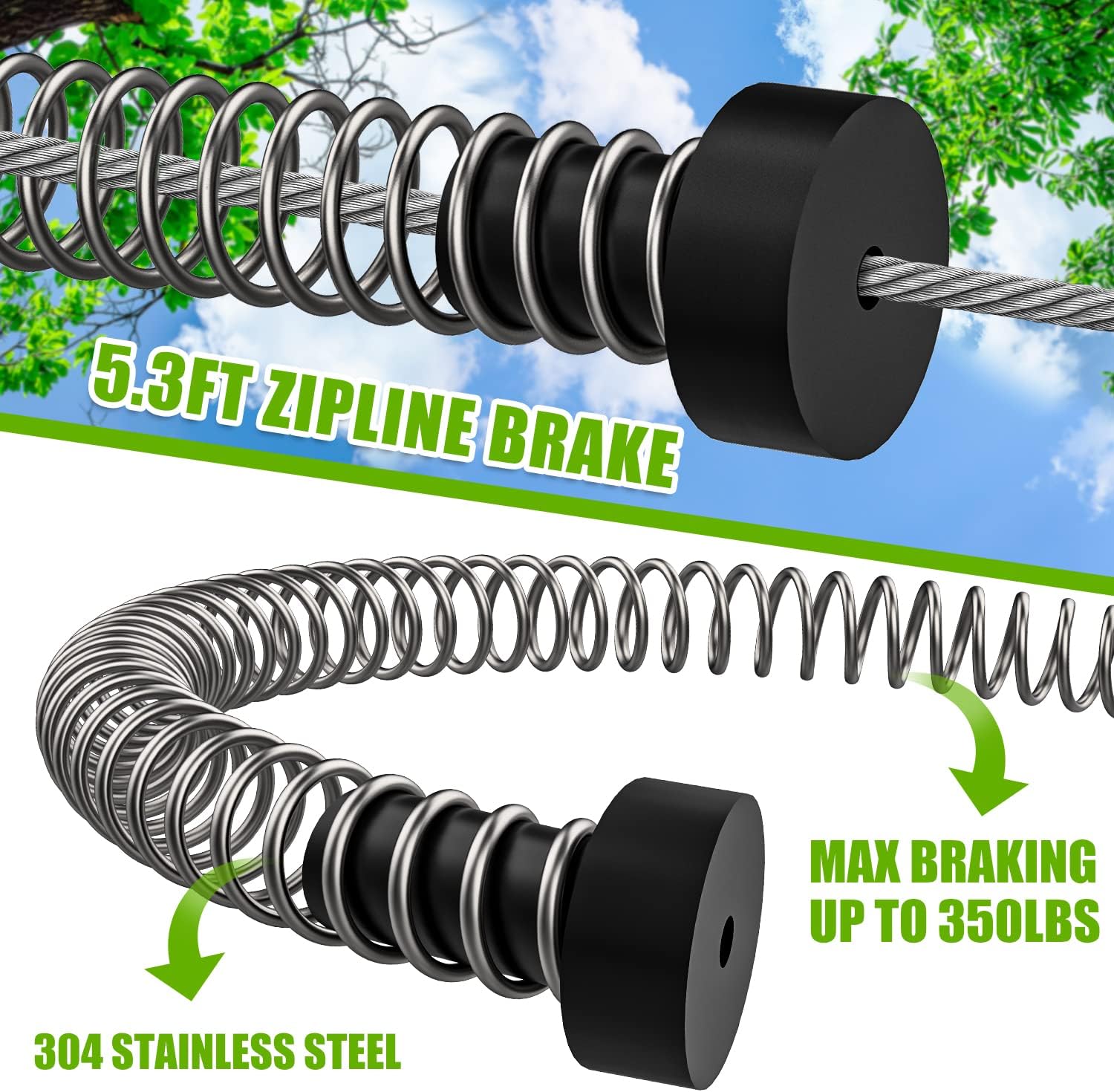
Check price on AmazonA spring brake is a mechanical device — typically a coiled compression spring inside a housing — that mounts on the cable ahead of the end anchor. The trolley hits the spring assembly, compresses it over a distance of roughly 8–18 inches depending on model, and the spring absorbs and releases that energy progressively. The deceleration is relatively abrupt compared to a bungee: most of the energy transfer happens in a short physical window.
For spans under 100 feet with grades under 5% and a consistent rider pool (for example, children in the 60–120 lb range), a single spring brake is appropriate, cost-effective, and durable. Size it for your maximum rider weight with a 25% margin. The Consumer Product Safety Commission’s Public Playground Safety Handbook and Backyard Equipment Safety Guidance consistently emphasizes the importance of deceleration distance and end-stop clearance — even on short residential builds, the spring brake’s stop zone needs to be positioned far enough from the terminal platform that the compressed spring, not the structure, absorbs the rider’s energy.
Spring brakes at this tier typically carry published load ratings of approximately 80–250 lbs rider weight, with deceleration distances of 8–24 inches. Inspect annually for corrosion and spring fatigue.
NTR
$19.59
In stock on Amazon
Check price on AmazonMid-Range Installations: Longer Spans, Mixed Rider Weights
Bungee 20FT
$129.00
In stock on Amazon
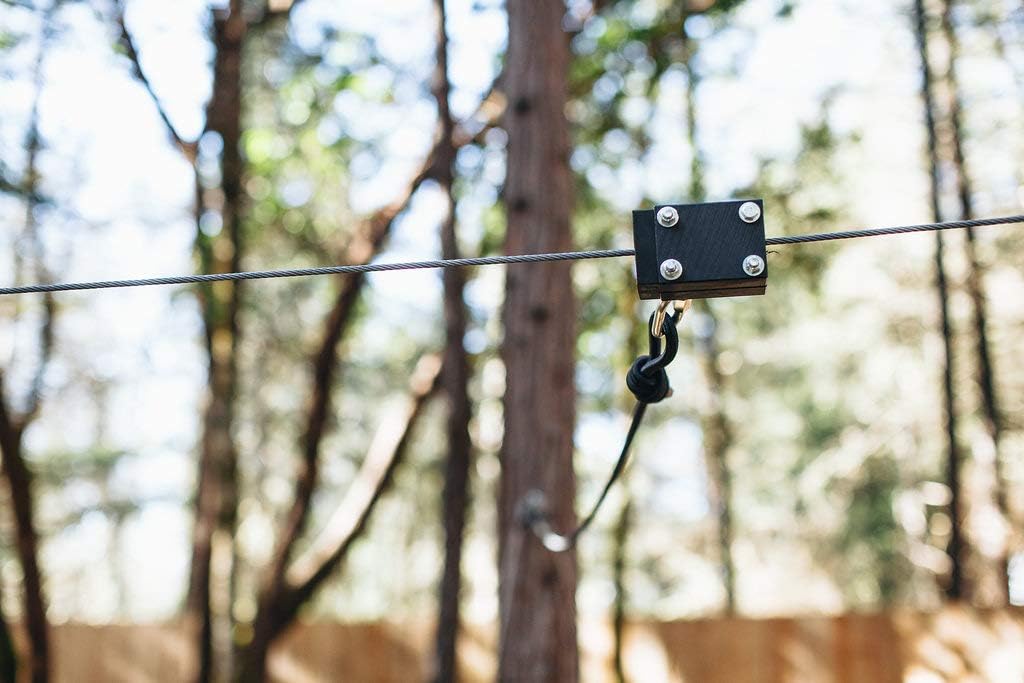
Check price on AmazonA bungee brake uses a length of rated shock cord — typically 3/8” to 1/2” diameter, looped or anchored between two points on the cable or between the cable and a fixed structure — to catch the trolley and stretch progressively, converting kinetic energy into elastic potential energy and releasing it gradually. The deceleration curve is gentler and longer than a spring: instead of 8–18 inches of stop, a properly configured bungee brake decelerates a rider over 4–10 feet of cord stretch.
For spans between 100 and 200 feet, or any installation where grade exceeds 5% or adult riders are regularly in the mix, a bungee brake as the primary system is the better choice. ASTM International’s Standard F2959 (Standard Practice for Aerial Adventure Courses) references deceleration force limits that effectively favor distributed-deceleration systems for spans over 150 feet. Bungee configurations that stretch over 5 or more feet of cord keep peak deceleration forces well within comfortable tolerance for the majority of rider weights.
Elastic cord degrades. UV exposure, repeated stretch cycles, and temperature cycling all reduce elasticity over time. The ACCT Standards for Challenge Courses and Canopy/Zip Line Tours, 9th Edition, references annual cord replacement as standard practice for commercial installations, with seasonal inspection for core degradation — flattening, discoloration, reduced stretch — before each operating season on residential builds. A bungee brake that has lost 20% of its elasticity delivers a noticeably harder stop; one that has lost 40% is effectively a fixed-length tether, not a brake.
Cold weather is the other vulnerability. Below approximately 40°F, standard bungee cord stiffens and loses its progressive absorption characteristic. If your installation operates year-round in a cold climate, a spring-primary or hybrid system is more reliable at this tier.
Bungee 20FT
$129.00
In stock on Amazon
Check price on AmazonHigh-Demand Installations: Long Spans, Variable Loads, Commercial Use
Zip
$238.00
In stock on Amazon
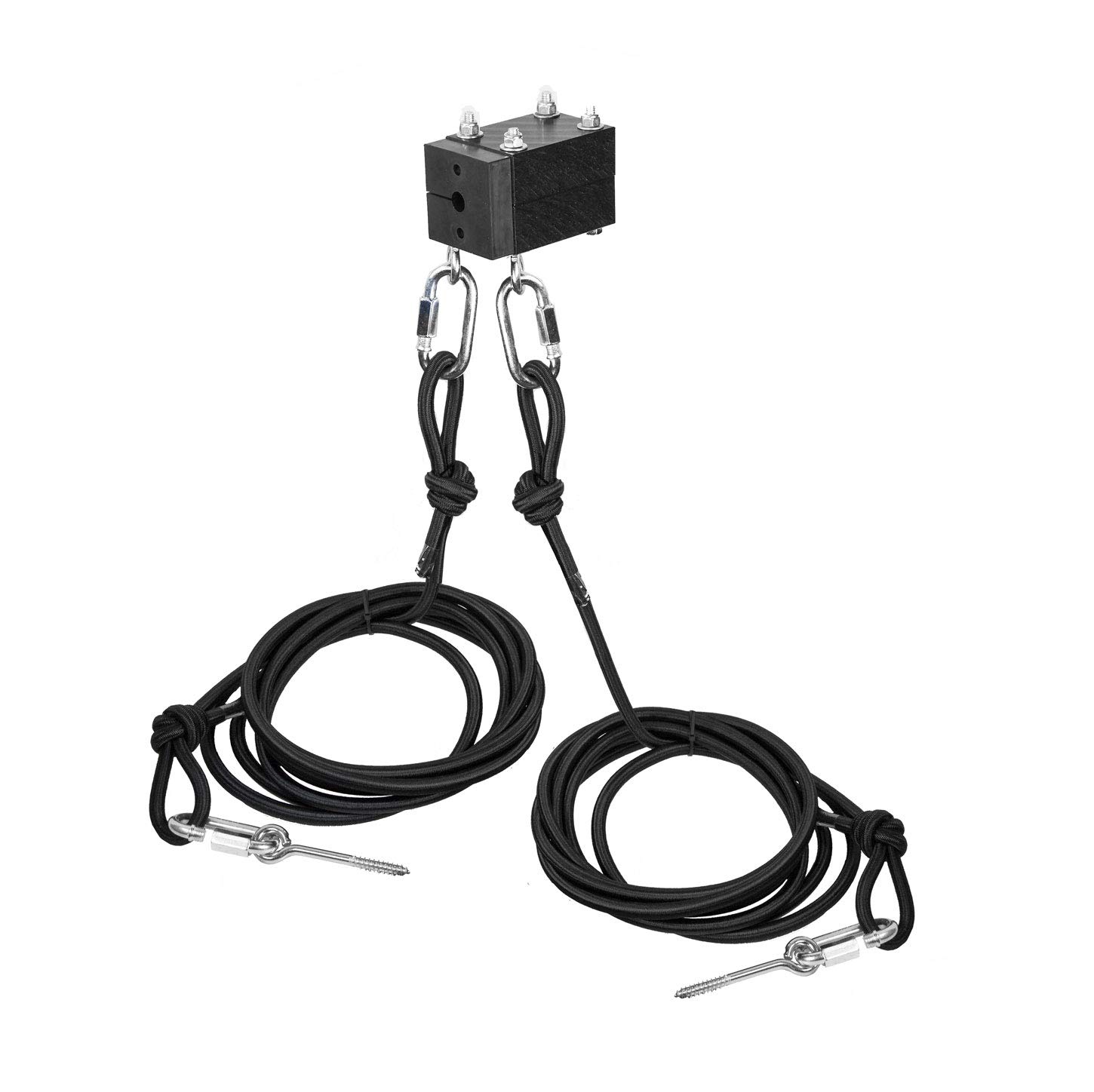
Check price on AmazonFor spans over 200 feet, steep grades, commercial or camp loads, or installations where adult and child riders share the same line across sessions, a two-stage system is the correct answer. This configuration — a bungee brake positioned 15–25 feet before the end terminus as the primary absorber, followed by a spring brake at the final stop position as a mechanical backup — is referenced in ACCT Standards for Challenge Courses and Canopy/Zip Line Tours, 9th Edition, as a best practice for spans with variable rider loads.
The mechanics are straightforward: if a 200-lb adult arrives at your bungee brake traveling at 22 mph, the bungee absorbs roughly 70–80% of the kinetic energy over its stretch distance. The spring brake catches the remaining 20–30% at dramatically reduced speed — approximately 6–8 mph — which is well within the spring’s comfortable operating range. The result is a stop that is both mechanically safe and experientially smooth.
Petzl’s technical notices on dynamic load management in rigging and descender systems reinforce the principle that distributed deceleration over longer distances keeps peak force on riders and hardware substantially lower than single-point stops, regardless of the mechanism used. That principle transfers directly to zipline brake configuration: the goal is not the shortest possible stop but the most controlled energy transfer across the longest practical distance.
This two-stage configuration is also the setup that most closely aligns with ASTM F2959 and ACCT 9th Edition standards for professional installations — which matters practically if you carry commercial liability insurance or operate under a permit. A third-party inspection before opening each season is advisable at this tier.
Zip
$238.00
In stock on Amazon
Check price on AmazonBy the Numbers: Quick Reference Comparison
The table below summarizes the key operational differences across both systems. Use it alongside the decision rule in the next section.
| Factor | Spring Brake | Bungee Brake |
|---|---|---|
| Ideal span length | Under 150 ft | 150–400+ ft |
| Deceleration distance | 8–24 inches | 4–10 feet |
| Rider weight band | Narrow (±40 lbs) | Wide (±80 lbs) |
| Cold-weather performance | Reliable to -20°F | Degrades below 40°F |
| Replacement interval (commercial) | 3–5 years, inspect annually | Annual cord replacement |
| Ride feel | Firm, abrupt | Soft, gradual |
| Best use case | Short spans, consistent loads | Long spans, variable loads |
Decision Rule: If X, Then Y
If you’re sitting with a build spec in front of you, here is the framework:
If your span is under 100 feet, grade is under 5%, and your rider pool is predictable: A single spring brake is appropriate, cost-effective, and durable. Size it for your maximum rider weight with a 25% margin. Inspect annually for corrosion and spring fatigue.
If your span is 100–200 feet, or grade exceeds 5%, or adult riders are regularly in the mix: Move to a bungee brake as your primary system. Select cord diameter and length based on your maximum rider weight at estimated arrival speed — most bungee brake kits from established zipline hardware suppliers include a sizing chart. Use the top of your weight range, not the average. Add a spring brake as a secondary catch.
If your span exceeds 200 feet, you’re running commercial or camp loads, or you have genuinely variable rider weights across sessions: A two-stage system — bungee primary, spring secondary — is the correct answer. This configuration aligns most closely with ACCT Standards for Challenge Courses and Canopy/Zip Line Tours, 9th Edition, and ASTM F2959 for professional installations.
If your installation runs year-round in a climate with consistent temperatures below 40°F: Prioritize spring brakes in both stages, and position your primary brake far enough from the terminus to give the spring’s shorter deceleration distance adequate room to work. Plan for a third-party inspection before re-opening each spring season.
A Final Note on Hardware Quality
Brake components are not an area to optimize on price. The spring brake assemblies and bungee brake kits distributed by established zipline hardware suppliers come with published load ratings and material specifications. Generic hardware-store bungee cord and unrated spring assemblies do not — and the failure mode for an undersized or degraded brake is not gradual. It is sudden.
The SaferParks database review of aerial adventure incidents makes clear that the gap between a correctly specified brake system and an undersized one is not a matter of comfort — it is a matter of whether a rider contacts the end structure at speed. Spend the money on rated hardware, document your installation specifications, and replace elastic components on schedule. The ride experience is worth it, and so is the peace of mind.